
Serving Danbury, Bethel, Brookfield, Newtown, Ridgefield, Redding, and New Fairfield.

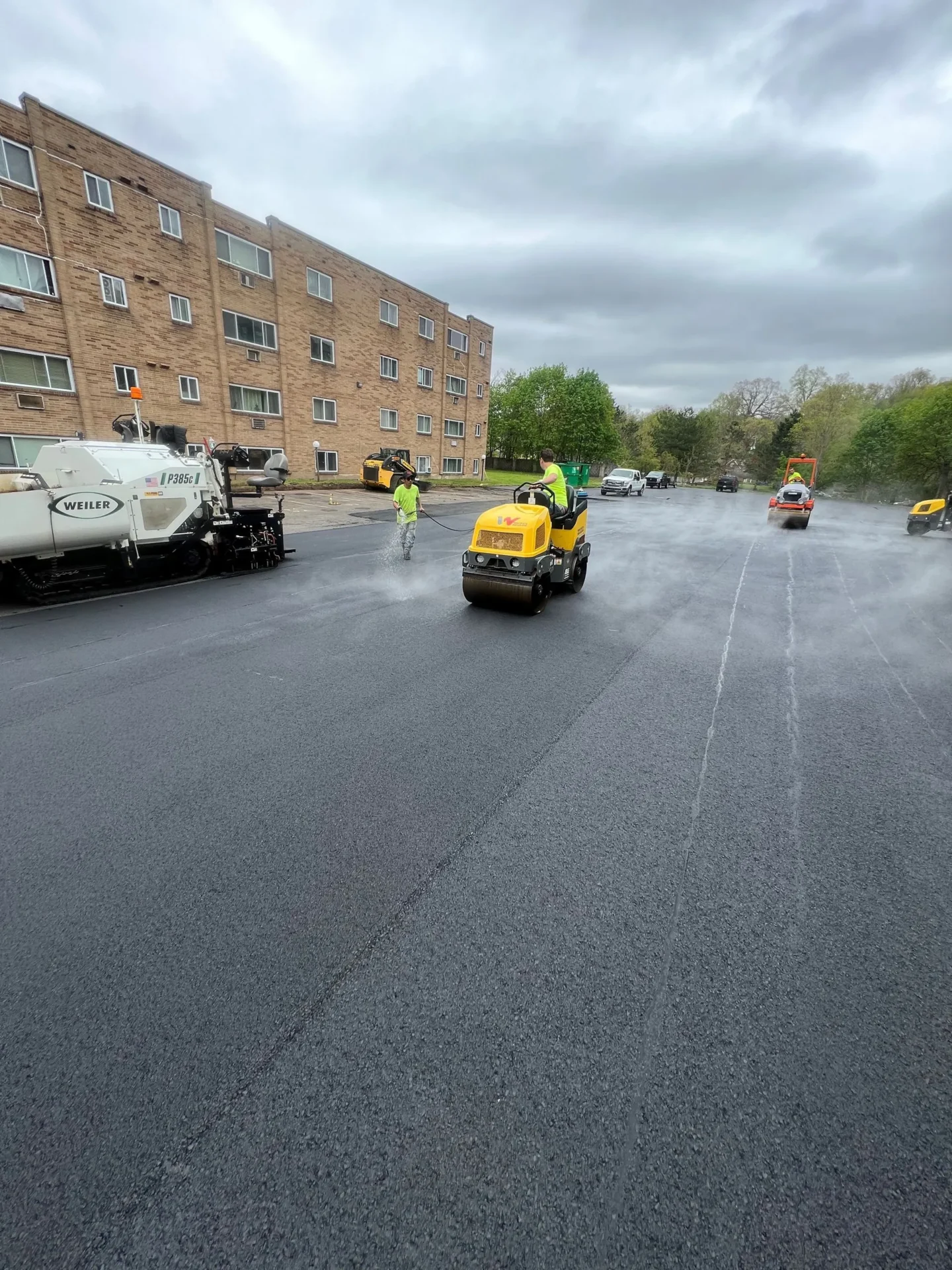
Our site work includes excavation, site and fine grading, aggregate base installation, compaction, drainage correction, regrading of washed-out driveways, and gravel to asphalt preparation.
Roadmaster Paving has been building the part of the driveway nobody sees since 1957. Almost every asphalt failure we are called to look at started here.
Nearly every asphalt failure is a water failure. Water enters through a crack, saturates the base, freezes, expands, and lifts the surface until traffic breaks it apart. Everything else follows from that.
Which means standing water is the best predictor available of where a surface will fail next. If water sits after a rain, the base under it is being saturated on a repeating cycle and that section is on a countdown. Correcting the pitch or adding drainage costs a fraction of reconstructing the area it would otherwise destroy.


Getting the grade right means water leaves the surface rather than travelling along it. On a driveway that usually means a crown or a consistent cross pitch. On a lot it means directing water toward existing structures rather than toward the low corner by a building entrance.
On sloped approaches, common in Ridgefield, Redding, and Newtown, water runs the length of the driveway rather than off it and finds the weakest point to undercut. Those drives need drainage designed in rather than added after the first washout.
The base is what carries the load. Asphalt is a wearing surface over it, not a structure in its own right. A driveway on four inches of properly compacted processed aggregate will outlast one on eight inches of asphalt over unstable subgrade.
We excavate to depth, install processed aggregate, and compact in lifts rather than in one pass. Depth depends on soil conditions and what the surface will carry, and it is the single largest difference between a driveway that lasts twenty years and one that fails in six.


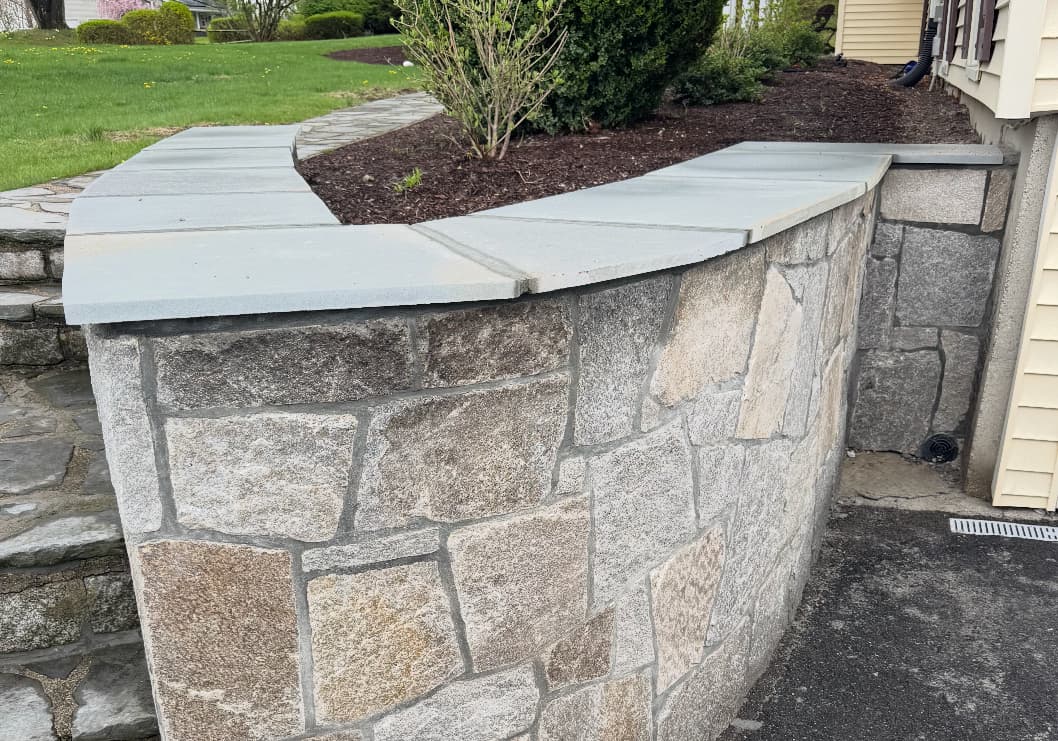
On existing surfaces, correcting drainage is usually cheaper than living with the consequences. That covers regrading to move water off the surface, adding capacity where a structure is undersized, resetting catch basins and drainage structures that have sunk or been buried under a previous overlay, and rebuilding shoulders where water runs off the edge and undercuts it.
Frost heave, edge crumbling, and settling are all drainage problems presenting as surface problems. Repairing the surface without addressing the water produces the same failure in the same place.
A gravel drive that has been in place for years has a compacted base underneath, which helps, but it is rarely at the right grade and almost never has adequate drainage. Converting properly means regrading the full length, correcting the crown, adding drainage where water collects, building the base to depth, and then paving.
Paving straight over existing gravel without that work produces a driveway that looks correct for one season. We quote conversions on long drives by the linear foot rather than by square footage, because on a four hundred foot approach the site work drives the cost more than the surface area does.

We spend more time below the surface than on it, and it is the part of the quote that is hardest to justify to someone comparing prices. A cheaper quote is almost always cheaper here. When you compare bids, ask each contractor what base depth they are installing and whether they are correcting the drainage.

Owner
We will do our best to meet or beat any written quote from a reputable competitor. Text or Call us