
Driveways and commercial parking lots. Serving Danbury, Bethel, Brookfield, Newtown, Ridgefield, Redding, and New Fairfield.

Our sealcoating services include driveway sealcoating, commercial parking lot sealcoating, crack filling ahead of sealing, oil spot treatment, surface cleaning and preparation, and scheduled maintenance agreements for property managers.
Roadmaster Paving has been sealing asphalt in northern Fairfield County since 1957. Sealcoating is the work we do most, and it is the cheapest thing anyone can do to delay a replacement.
Asphalt is aggregate held together by bitumen binder. UV light, water, oil, and gasoline all break that binder down. As it goes, the surface loses its black colour, turns grey, and opens up. Once it is open, water reaches the base, and everything expensive follows from there.
Sealcoat is a surface barrier against those four things. It does not add structural strength and it does not fix anything that is already broken. What it does is slow the process that turns a sound driveway into a failed one, which is why sealing on a regular cycle costs a fraction of what replacement does.


Most sealcoating that fails does so for one of four reasons, and all four are preparation rather than product.
Most residential driveways benefit from sealing every two to three years, though it depends on exposure, traffic, and how much shade the driveway sits under. Sealing more often than that is money spent on appearance rather than protection, and any contractor recommending an annual cycle is selling you something you do not need.
Most driveways are done in a few hours. The surface needs to stay clear while it cures, usually 24 to 48 hours depending on conditions, and we will tell you what to expect before we start.
The right time to seal a new driveway is not immediately. Fresh asphalt needs to cure, typically several months to a year, before it takes sealer properly.


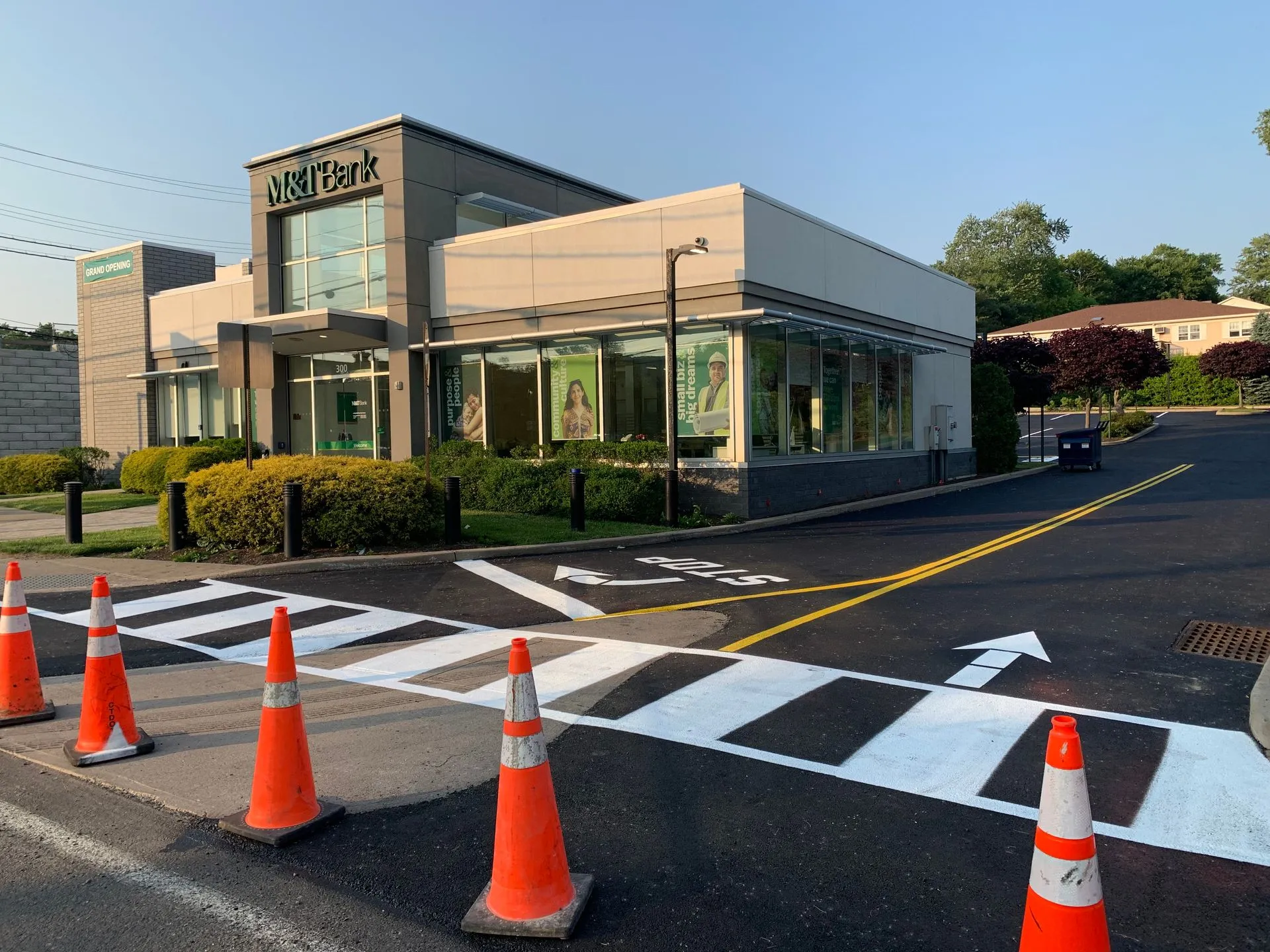
Commercial sealing is a different job. Lots are larger, they cannot close for a full cure, oil staining is heavier, and the striping has to be reinstated afterward.
We phase lot sealing section by section so the property stays open and accessible, and we schedule around business hours where the lot cannot be partly closed during the day. Striping goes back down once the seal has cured, and a repaving or resealing is the cheapest moment to correct an ADA deficiency or add capacity to the layout.
Sealing on a regular cycle is the single largest lever a property manager has on pavement lifespan. A lot sealed every three years and crack-sealed in between will outlast an unsealed lot by years on the same base.

For property managers with more than one site, we set up scheduled agreements covering inspection, crack sealing, sealcoating on cycle, and small patching. The point is budgeting against a known annual number rather than emergency repairs, and catching failures while they are still cheap.

Sealcoating is preventive. It will not fix alligator cracking, potholes, ruts, or a failing base, and sealing over those hides the problem for a season while it continues underneath. If a lot or driveway has reached that stage, we will tell you, and we would rather lose the sealing job than take money for work that will not hold.

Owner
We will do our best to meet or beat any written quote from a reputable competitor. Text or Call us